
How to Choose the Perfect Dining Table
A complete guide to choosing the right dining table for your home, covering size, shape, wood species, and style.
Start With Your Space
Before you browse styles or pick a wood species, grab a tape measure. Your dining room dimensions dictate everything: table size, shape, and how comfortably your family will sit.
Start by measuring the room's length and width, then subtract 72 inches from each dimension (that's 36 inches of clearance on every side). The remaining space is your maximum table footprint.
Why clearance matters:
- ✓36 inches minimum between table edge and wall to pull a chair back and sit down
- ✓44-48 inches near doorways and high-traffic paths
- ✓24 inches of table width per place setting so elbows don't collide
A common mistake is buying a table that technically fits the room but leaves everyone squeezing past each other at every meal. If your dining room is narrow, consider a trestle table. The lack of corner legs makes it easier to squeeze in extra chairs at the ends.
Choose the Right Shape
Table shape affects conversation flow, seating capacity, and how the piece fits your room. Here's how the four main shapes compare.
Rectangular
The most versatile and popular choice. Seats the most people for its footprint, fits most dining rooms, and pairs well with buffets or hutches. With extension leaves, expand from 6 seats to 10+.
Round
Fosters conversation because everyone faces the center. Ideal for square rooms and groups of 4-6. A 48" seats 4; a 60" seats 6. Beyond 60", passing dishes gets difficult.
Square
Creates an intimate, balanced setting for 2-4 people. Works beautifully in breakfast nooks and small dining areas but doesn't scale well for larger groups.
Oval
Combines rectangular seating capacity with softer lines. Great for narrower rooms since rounded ends create more walkway space. A good choice with young children.
Quick Sizing Rule
Allow 24 inches of table length per person. A 72-inch table comfortably seats 8. Always round up if you entertain frequently.
Expert Tip
Always order one size up if you entertain frequently. A table that seats 8 is more versatile than one that seats 6, and you'll never regret the extra room.
Pick Your Table Base
The base style affects more than appearance. It determines how many chairs fit comfortably, how stable the table feels, and how easily you can extend it.
Trestle Base
Two upright supports connected by a horizontal beam. Exceptionally strong, handles heavy tabletops, and leaves both ends completely open for seating. Because there are no corner legs, you can fit more chairs along the sides.
Best for: Large families, entertaining, extension leaves
Pedestal Base
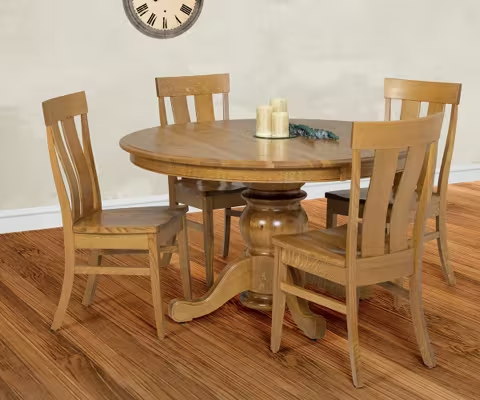
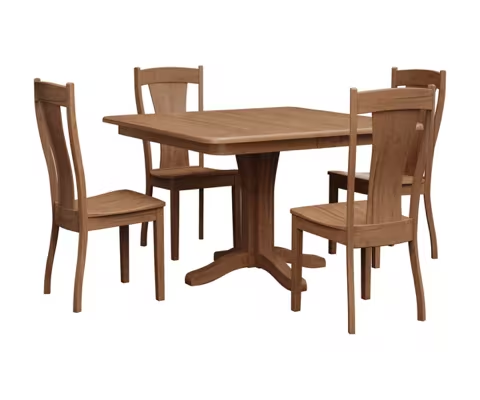
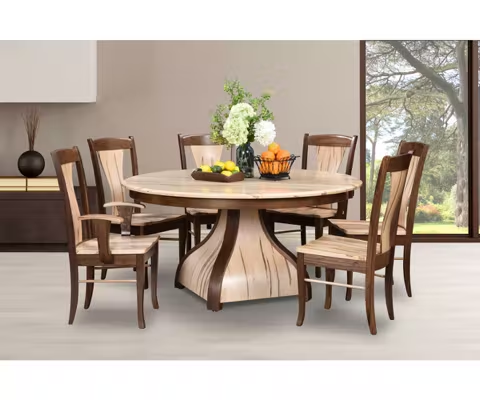
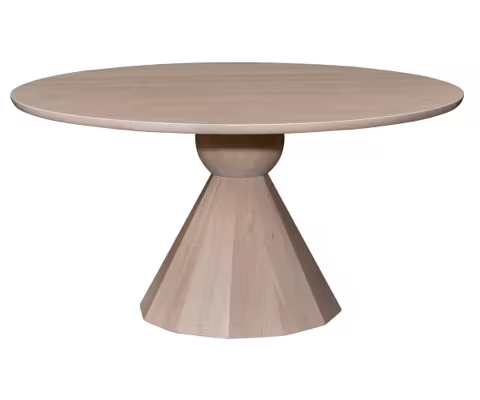
A single central column (or double on longer tables). The biggest advantage is seating flexibility: no corner legs means equal legroom everywhere, and you can add chairs anywhere. Round and oval tables often use pedestals.
Best for: Round/oval tables, flexible seating, smaller groups
Leg-and-Apron Base
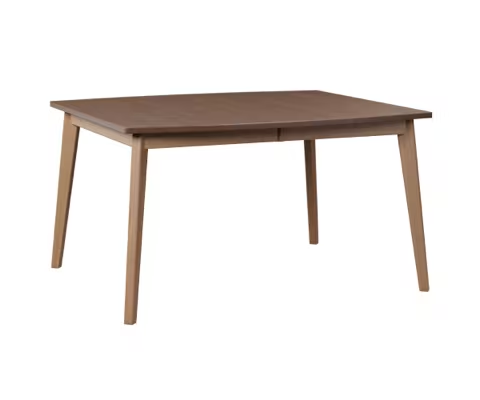
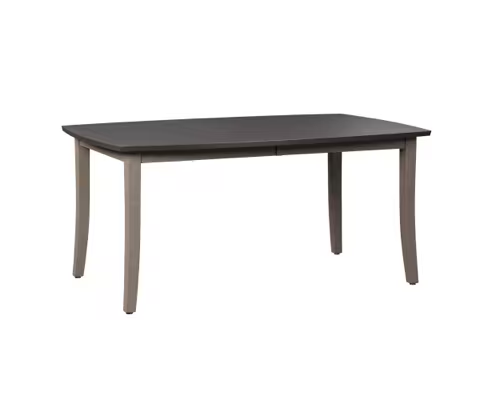
The most traditional style: four legs connected by a horizontal apron frame. Inherently sturdy and provides solid support for heavy solid wood tops. Corner legs can interfere with end seating on larger tables.
Best for: Tables under 60", classic look, maximum stability
Select Your Wood Species
The wood you choose shapes the table's appearance, durability, and how it ages over the decades. Every species has a distinct personality.
Oak
Janka 1,290The most popular choice for dining tables. Extremely durable, resists dents and scratches from daily use. Red oak has warm, pronounced grain for traditional and farmhouse styles. White oak is slightly harder with more subtle grain. Both take stain beautifully.
Cherry
Janka 950Refined elegance that's hard to match. Cherry's defining characteristic is its natural color change: starts as light pinkish-brown and deepens to a rich, warm reddish-brown over months and years. Your table becomes more beautiful with age.
Maple
Janka 1,450The hardest common furniture wood, making it the most scratch-resistant option for busy families. Tight, uniform grain gives a clean, contemporary look. Light, creamy color brightens a dining room.
Walnut
Janka 1,010Naturally rich, dark brown color that doesn't require stain. Beautiful with just a clear protective finish. The most expensive domestic hardwood, but its natural depth makes it worth considering for a statement dining table.
At Amish Exclusive, you can see and touch all of these species in our Webster showroom. The best way to choose is in person.
Determine the Right Size
Getting the size right is the single most important decision. Too small and meals feel cramped. Too large and the room feels crowded with nowhere to walk.
The standard rule: 24 inches of table length per person along each side.
Rectangular
- 60" seats 6
- 72" seats 8
- 84" seats 10
- 96" seats 12
Round
- 42" seats 4
- 48" seats 4-5
- 54" seats 6
- 60" seats 6-8
Always round up. A table with extra room feels comfortable; one that's slightly too small feels noticeably cramped. If holidays and dinner parties are part of your life, buy for your maximum group size. That's where extension leaves become invaluable: a table that seats 6 daily can expand to seat 10 when guests arrive.
Extension and Expandable Options
Extension leaves are one of the best features of handcrafted dining tables, letting you scale your table to match the occasion. There are three main types.
Butterfly Leaves Most Popular
Also called self-storing leaves. The leaf is hinged in the center and folds down into a cavity beneath the tabletop when not in use. Pull the two halves apart and the leaf unfolds into place. No separate storage needed, and you'll never lose a leaf because it lives inside the table.
Self-Storing Slider Leaves
Slides out from beneath the tabletop on wooden guides. Flush with the table surface when deployed, completely hidden when stored. Particularly smooth to operate on well-built tables with solid wood slides.
Removable Leaves
Separate boards you insert into the center of the table. Need external storage (closet, under a bed). The advantage: multiple leaves for large expansions. Some tables accommodate 2-3 leaves, turning a 72" table into a 120" banquet table.
For most families, a butterfly leaf or self-storing mechanism is the best balance of convenience and capacity. At Amish Exclusive, we can help you choose the right extension mechanism for how you actually use your table.
Our Dining Collection
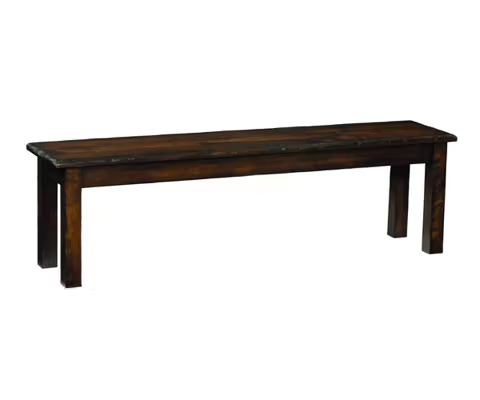
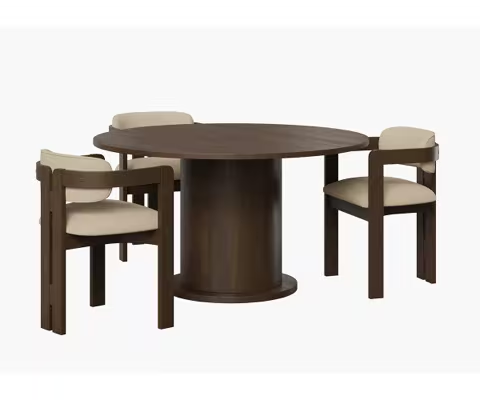
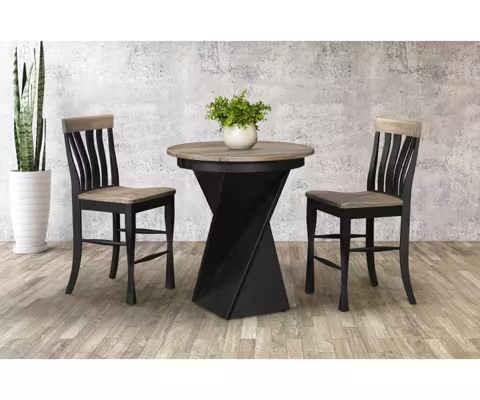

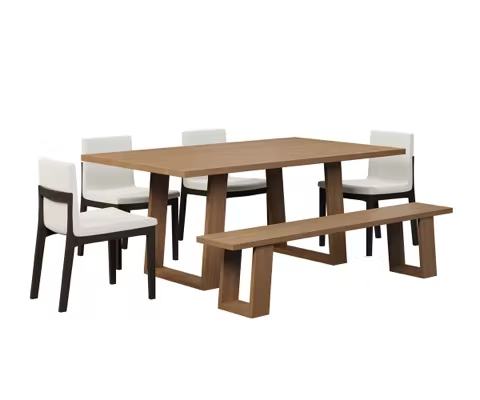
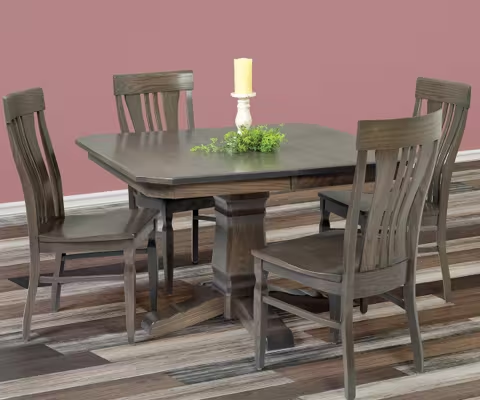


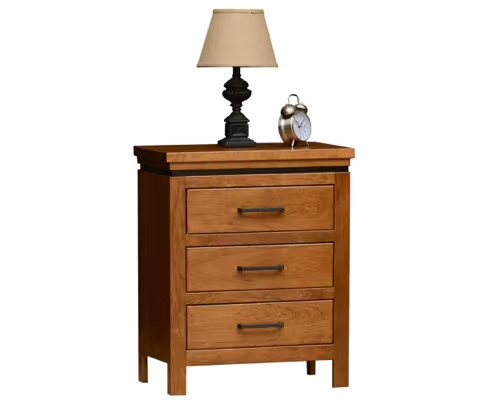


Considering Other Options? See How We Compare
vs Ethan Allen
See how Amish Exclusive compares to Ethan Allen in Rochester
vs Stickley
See how Amish Exclusive compares to Stickley in Rochester
vs Arhaus
See how Amish Exclusive compares to Arhaus in Rochester
Related Guides
Wood Species Guide: Oak, Cherry, Maple, Walnut & Hickory
Compare hardwood species for furniture: oak, cherry, maple, walnut, and hickory. Learn which wood is right for your h...
How to Choose Solid Wood Furniture That Lasts
Learn how to identify quality solid wood furniture, avoid common pitfalls, and make an investment that lasts generati...
Frequently Asked Questions
Ready to See the Quality in Person?
Visit our showroom at 2045 Empire Blvd, Webster, NY
Tue-Sat 11am - 5pm | Sun 12pm - 4pm | Mon By Appointment Only
Call (585) 670-0607