
Dining Chair Buying Guide
How to choose dining chairs that pair well with your table, feel comfortable for long meals, and hold up to years of daily use.
Why Chairs Matter More Than You Think
Most people spend weeks choosing a dining table and about ten minutes picking chairs. That's backwards. You sit in your chairs at every meal, and a bad choice means sore backs, wobbly frames, and chairs that need replacing in a few years. A solid hardwood dining chair built with mortise-and-tenon joinery will outlast multiple sets of big-box store chairs. The seat shape, back angle, and arm height all affect comfort during long dinners and holiday gatherings.
Seat Height and Table Pairing
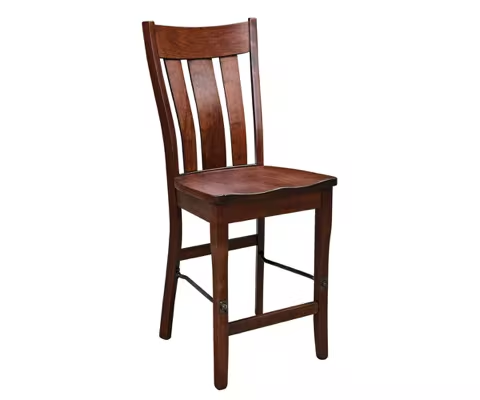
Standard dining table height is 30 inches. Your chair seat should be 17 to 19 inches from the floor, leaving 11 to 13 inches between the seat and the tabletop. That gap gives enough room for your legs while keeping the table surface at a comfortable eating height. Counter-height tables (36 inches) need 24-inch stools, and bar-height tables (42 inches) need 30-inch stools. Always measure your specific table before ordering chairs, because custom tables may vary by an inch or two from standard heights.
Height Rule
Chair seat height should be 11-13 inches below the tabletop. For a standard 30-inch table, that means 17-19 inch seats.
The Sit Test
Always sit in a dining chair for at least 5 minutes before buying. Lean back, shift your weight, and push on the frame. Quality shows in how the chair feels and sounds.
Side Chairs vs. Arm Chairs
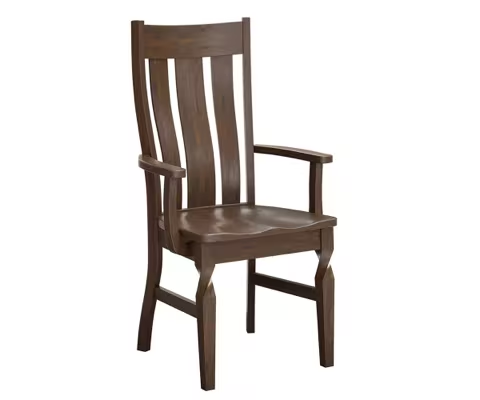
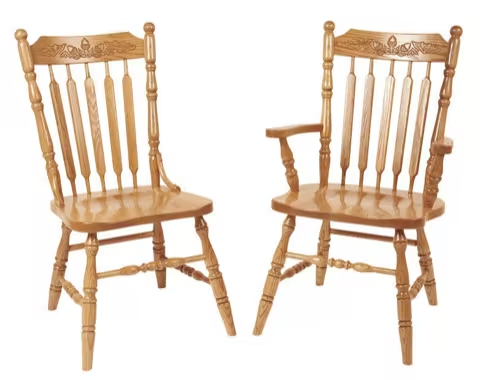
Side chairs (no arms) are the workhorses of a dining set. They take up less space, tuck fully under the table, and cost less per chair. Most families use side chairs for the majority of their seating. Arm chairs add comfort and a more formal look, especially at the head and foot of the table. They need about 2 extra inches of width per chair, so factor that into your table size. A popular approach is two arm chairs at the ends and side chairs along the sides.
Wood Seats vs. Upholstered Seats
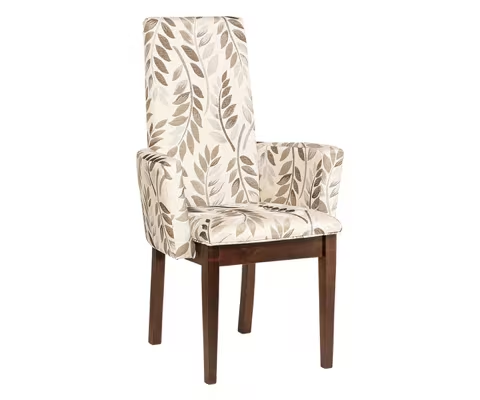
Wood seats are the easiest to maintain. A quick wipe cleans up any spill, and there's nothing to stain, tear, or wear out. Shaped wood seats with a slight scoop in the center are surprisingly comfortable for meals up to about an hour. Upholstered seats add cushion for longer dinners and evening conversations. If you go with fabric, choose a performance fabric rated for high use, especially with kids in the house. Leather and vinyl are also options that wipe clean easily. Many Amish chair designs let you swap between a wood seat and an upholstered seat on the same frame.
Construction Quality to Look For
Flip the chair over and look at how the legs connect to the seat. Mortise-and-tenon joints (a projecting piece fitted into a matching hole) are the gold standard. Corner blocks glued and screwed into the underside add extra rigidity. The back should feel solid when you push on it, with no flex or wobble. Avoid chairs assembled with only dowels and glue, as these joints loosen over time. Dovetailed or pinned joints in the stretchers (the horizontal bars between legs) are another sign of quality construction.
Matching Chairs to Your Table
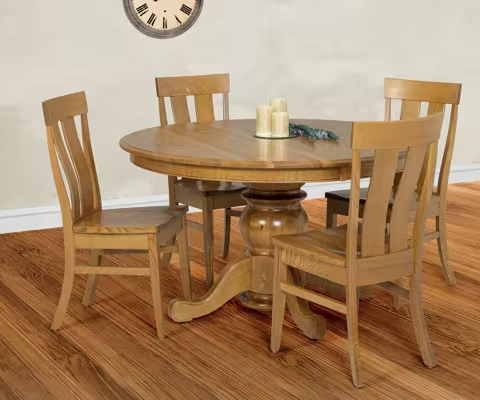
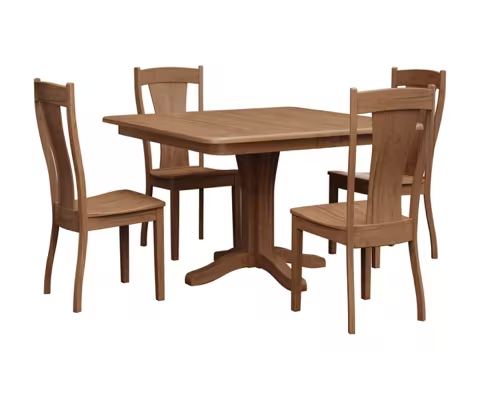
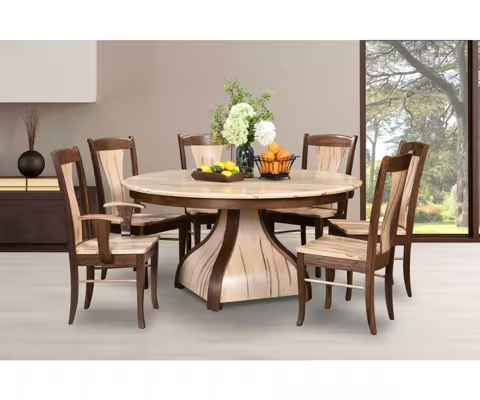
Chairs don't have to come from the same collection as your table, but they should share the same wood species and stain color for a cohesive look. Mixing chair styles intentionally (different backs at the ends vs. sides) is a popular design choice that creates visual interest. The key is keeping the seat height consistent across all chairs so everyone sits at the same level. Visit our Webster showroom to try different chair and table combinations in person. Comfort varies significantly between styles, and the only way to know what works for your body is to sit in them.
Our Dining Collection

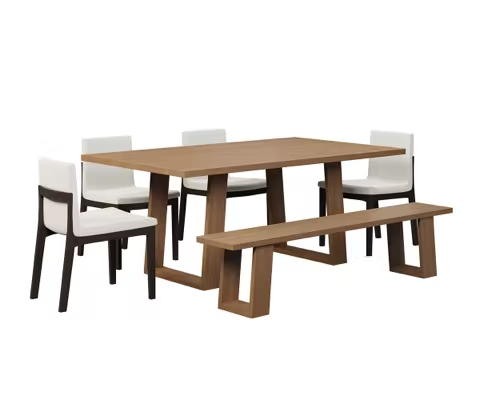
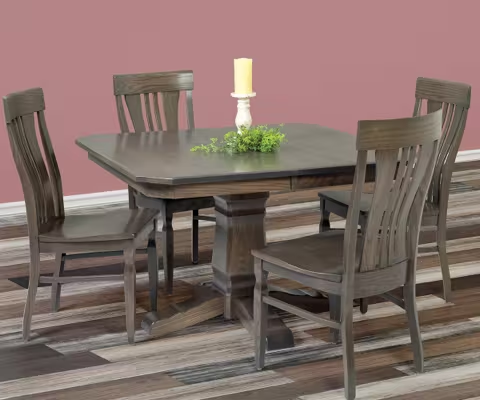


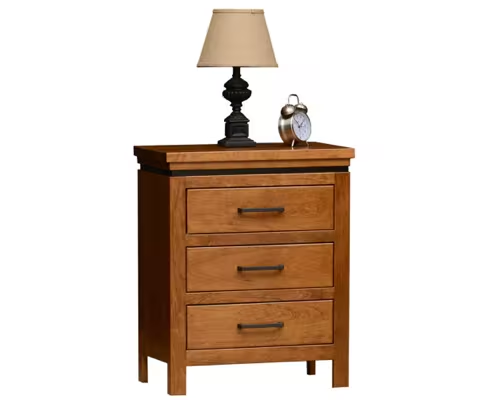


Related Guides
How to Choose the Perfect Dining Table
A complete guide to choosing the right dining table for your home, covering size, shape, wood species, and style.
Wood Species Guide: Oak, Cherry, Maple, Walnut & Hickory
Compare hardwood species for furniture: oak, cherry, maple, walnut, and hickory. Learn which wood is right for your h...
Frequently Asked Questions
Ready to See the Quality in Person?
Visit our showroom at 2045 Empire Blvd, Webster, NY
Tue-Sat 11am - 5pm | Sun 12pm - 4pm | Mon By Appointment Only
Call (585) 670-0607